








From time to time you might have come across mention of something known as a gold-backed trust bond. And knowing of our strong belief here at TTI in the benefits—and we think the inevitability—of gold taking on a key role within the global monetary reserve system—coupled with our belief that a gold-linked currency here at home is essential to serve as a kind of spiritual bridge that could let the U.S. get back on an upward track—you may wonder how we feel about it. Is this a valid, useful approach to solving some of the ills that have resulted from a fiat-currency-dominated world?
The idea of a gold-backed trust bond is that the U.S. Treasury would offer bonds that at maturity—which some adherents have suggested could be as long as 50 years out—could be redeemed either for a predetermined amount of gold or for the bond’s face value in U.S. dollars (with interest payments made to bondholders on a regular basis throughout the life of the bond). Clearly, for this to work, the U.S. needs, first, to have sufficient gold on hand and, second, the Treasury would have to allocate a significant portion of those holdings to be available to investors who request redemption in gold. It would, albeit in a limited way, establish a direct link between the dollar and gold for the first time since 1971, when Nixon abandoned the gold standard established at Bretton Woods.
Proponents of the gold-backed trust bond see it as fostering monetary discipline and stability and providing a check against inflation. They suggest it could address the staggering U.S. national debt by making it more likely that the government could borrow at lower interest rates. More generally, the thinking is that gold-backed bonds would be a symbol of a return to a commitment to sound money and a sign to other nations that the U.S. is no longer the profligate nation that we clearly have become, counteracting qualms about the dollar that our enormous national debt has provoked.
When it comes to the underlying belief in the importance of gold in a monetary system, count me in. That’s something I obviously share with the adherents of a gold-backed trust bond. But when it comes to supporting this specific approach, I don’t think its supporters have appreciated the problems and ramifications.
For example, for the bond to make a meaningful impact on our precarious fiscal situation, it would have to carry a value that would be significant relative to U.S. debt. That would require a massive revaluation of the price of gold. Without an audit and full clarification of U.S. gold holdings, that would be a nonstarter.
Revaluing gold
But let’s assume that an audit validates that the U.S. truly has the 8,000 tons of unencumbered gold that we are presumed to hold. Then by my rough calculations, gold would have to reach a price close to $40,000 an ounce in order to back around 25% of U.S. debt. I wouldn’t rule that out, although gold that high would have ripple effects throughout the economy that make such a high revaluation problematic. I’ve detailed these in a previous article and won’t repeat them here: “Geopolitics and the Future of Gold: Could It Reach $30,000 an Ounce?”
One thing to realize is that a much higher valuation for gold would leave China in a commanding position in terms of global finance. That’s because China controls a lot more gold than we do. Gold expert Andrew Maguire, who won renown as the first person to produce concrete evidence of gold’s manipulation, is supremely knowledgeable about the mechanics of gold and has been the most accurate person I know in projecting gold’s shorter-term trends. He has calculated that China has nearly 70,000 tonnes (metric tons) under its control and most recently said the figure could be as high as 80,000 tonnes. I tend to think that 30,000 tonnes is probably closer to the mark. But if gold were revalued to $40,000, even 30,000 tons would bring the value of China’s gold to close to $40 trillion, or about 35% of global GDP. And 80,000 tonnes would leave China with control of gold valued at more than 90% of world GDP.
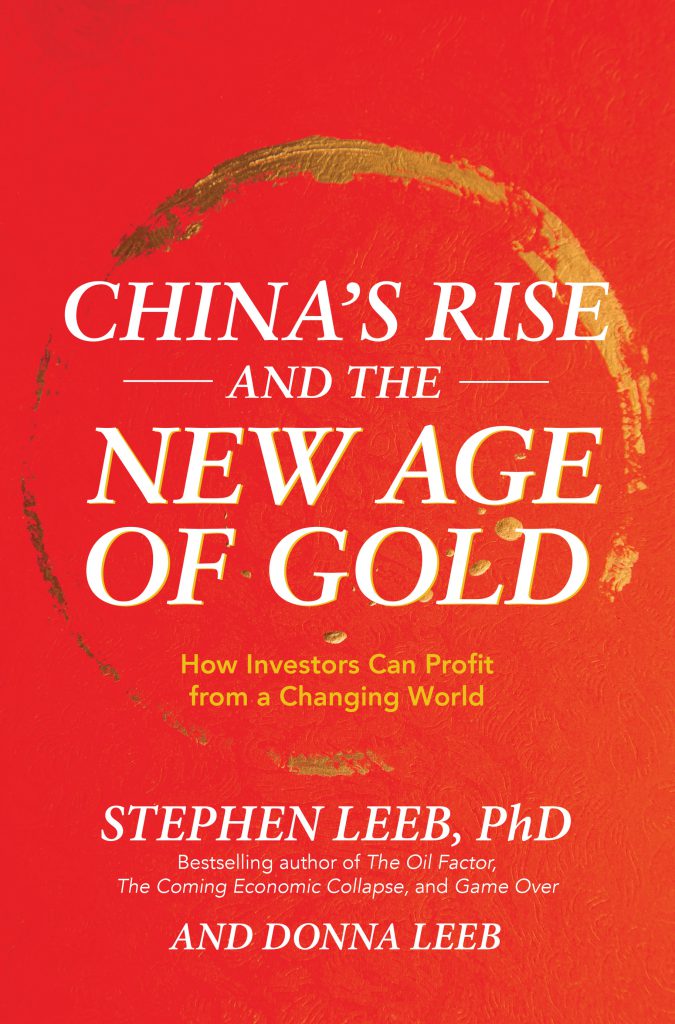
Basically, I question what is gained by structuring the gold-dollar link in the form of a long-term bond, which sets long-term bounds on gold’s value. I don’t see its advantage over a straightforward revaluation of gold and a broader revamping of the global monetary reserve system. In my 2021 book “China’s Rise and the New Age of Gold“ I devoted a chapter to speculating about the possible form a new gold-linked global reserve currency might take, how it might be structured, and I still think, as I did then, that a basket of currencies that includes gold and gold-backed currencies along with a flexible collection of commodities is a plausible approach. Perhaps such a basket could include a long-term gold-backed U.S. bond, but I doubt that the other parties to the agreement would allow the U.S. to have full custody of the gold.
An end to the dollar’s hegemony?
What’s basic to realize and to come to terms with is that any meaningful move to make gold more ascendant would be a move towards ending the dollar’s hegemony—indeed, for other countries, such as the BRICS members, that is one big motivation. Trump, who seems anxious to make peace with both Putin and Xi, conceivably might go for it. But it’s not clear even he—and assuming all the questions regarding U.S. gold holdings are satisfied—would have the agency to effect changes that would be such a visible nail in the coffin of U.S. hegemony. Or that in the end he’d want to, given assertions he’s made to the effect that the dollar must always remain king.
I continue to believe strongly that the loss of dollar hegemony in exchange for a gold-backed world will ultimately be to our benefit as long as we can bring ourselves to cooperate with the rest of the world—which I see as critical to our having any kind of happy, prosperous future. As I noted in starting this article, and as I’ve written before, I believe gold has the special qualities that would let it serve as a spiritual bridge enabling us to restore the values and spirit and optimism that characterized America for so long. It would give us a lot to look forward to.
In an earlier article, I quoted Howard Buffett, the father of Warren Buffett, and I think it’s worth returning to him again. The senior Buffett, among other things, started a successful brokerage firm and also served as U.S. Congressman from Nebraska. And he was a fervent believer in gold-redeemable money as the backbone of the U.S. economy, because he tied it not just to economic benefits but to human freedom itself. He wrote: “…if human liberty is to survive in America, we must win the battle to restore honest money. There is no more important challenge facing us than this issue—the restoration of your freedom to secure gold in exchange for the fruits of your labors.”
There’s a lot more to say about gold, where it’s headed, and how it will get there, and we’ll be expanding on these thoughts in future articles. For now, we want to continue to stress that in today’s world, gold is the supreme “must-own” investment. Projecting its near-term trajectory is always hazardous, and volatility is to be expected—but that volatility will come in the context of further gains, and possibly very dramatic gains, in gold’s price.
One other point: Along with gold, we’ve also consistently noted that we like other commodities and especially silver, and that remains true. In contrast to gold, however, these commodities are unlikely to hold their value if we see a major economic downturn.

Take Your Investment Strategy to the Next Level
Affordable. Essential. By joining Turbulent Times Investor, you’ll gain full access to 75 Stocks in the Core Investment Portfolio recommendations… Updates delivered directly to your inbox throughout the month… Instant buy/sell alerts.
Join now for just $10 per month
Most investors have yet to grasp the extent to which the world is changing and the profound impact it will have on financial markets. The global stock markets are rapidly approaching an era of unprecedented turbulence. Investors face enormous risks—but also some great opportunities, which we highlight and monitor in our Core Investment Portfolios.
Don’t miss out—join now to stay in the loop.